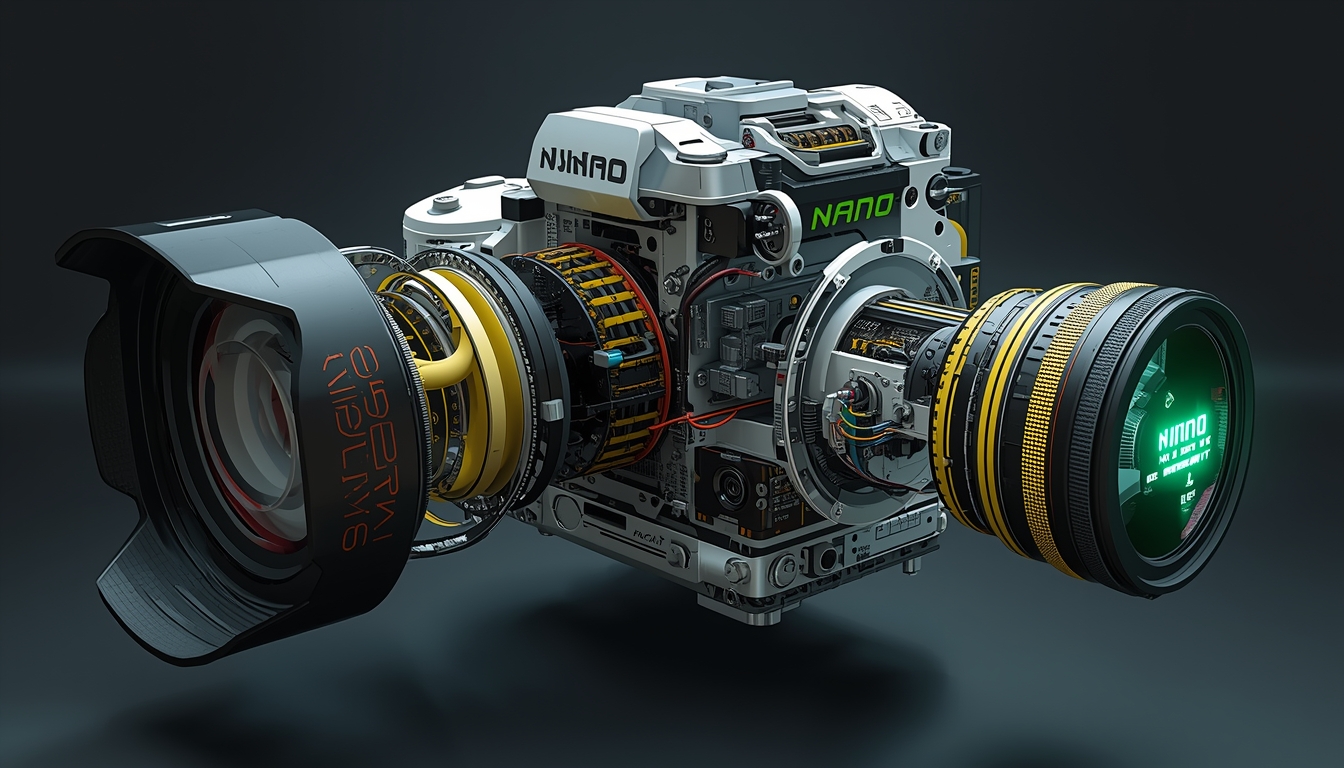
Introduction
In advanced product visualization and cinematic technology training, exploded view rendering is one of the most effective techniques to explain internal construction and engineering accuracy. Cameras, especially cinema-grade cameras, are complex devices made of multiple precision components. Showing these components individually—while maintaining realism—requires a carefully structured prompt.
The Nano Banana Prompt is designed specifically to generate photorealistic exploded views and assembly animations of a camera while preserving the integrity of the original photograph. This article explains the concept, workflow, and practical use of this prompt, making it ideal for training, education, and professional visualization.
What Is an Exploded View Camera Render?
An exploded view is a visual representation where all parts of a product are disassembled and suspended in space, showing how each component fits into the final structure. Unlike simple cutaway visuals, exploded views maintain:
- Accurate proportions
- Logical spatial order
- Realistic engineering alignment
- Clean separation of parts
For a camera, this includes:
- Lens elements
- Sensor unit
- Internal electronic boards
- Metal brackets
- Buttons and dials
- Top housing and branding components
Core Training Principle: Preserve the Original Photo
One of the most important aspects of the Nano Banana Prompt is preserving the original image composition. The realism of the exploded view depends on keeping all non-camera elements untouched.
The prompt strictly enforces:
- Same hand position
- Same arm posture
- Same camera angle
- Same framing and background
- Same lighting and perspective
Only the camera itself is allowed to separate into components. This approach ensures the final output feels like a real studio photograph rather than a digitally manipulated scene.
Image Generation Prompt (Nano Banana Prompt)
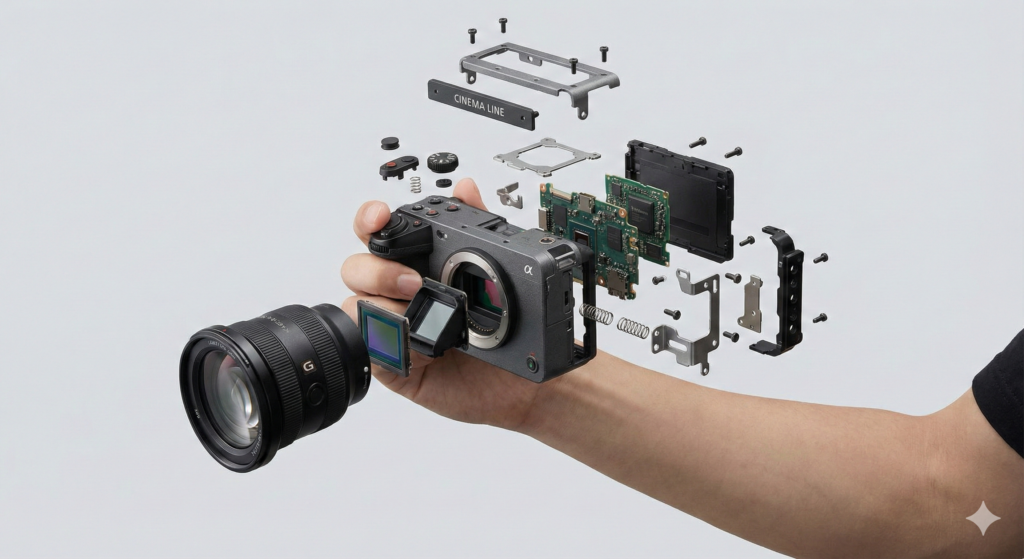
Image Prompt:
*Create an exploded view of the camera where all components are disassembled and floating in mid-air, including the lens, internal parts, metal brackets, and buttons. Even the top bracket must be separated into its constituent components.
Keep the exact same hand position, camera angle, framing, perspective, lighting, background, and composition as the original photo.
The hand and arm remain fully intact and unmoved.
Only the camera separates cleanly into parts, evenly spaced, with realistic proportions.
Photorealistic, no distortion.
Especially important: the top bracket that states “cinema line” must be detached into its constituent components and floating. It should not be locked in the same placement as the original photo.*
This prompt ensures engineering-grade accuracy while maintaining cinematic realism.
Importance of Clean Component Separation
From a training perspective, clean separation is critical. Each component must float naturally in alignment with its real-world position. The spacing should feel intentional and engineered, not random or exaggerated.
Key rules followed:
- No stretching or bending
- No visual distortion
- Correct mechanical orientation
- Real-world material realism
This makes the output suitable for technical education, product breakdowns, and professional presentations.
Special Focus: “Cinema Line” Top Bracket
The explicit instruction regarding the “Cinema Line” top bracket highlights attention to detail. Branding plates and top brackets are often separate physical components, and locking them into a single piece reduces realism.
Training value:
- Demonstrates structural authenticity
- Improves trust in the visualization
- Enhances professional credibility
By disassembling the top bracket into its constituent parts, the visualization achieves true-to-life accuracy.
Video Animation Prompt: Assembly Sequence
After generating the exploded image, the same logic is extended into motion through an assembly animation.
Video Prompt:
*Animate the exploded product parts smoothly assembling into the fully built product.
All parts move inward along their original positions and axes.*
This animation style avoids cinematic exaggeration and instead focuses on mechanical realism. Each component travels along its correct axis, resulting in a smooth and satisfying assembly process.
Photorealism and Zero Distortion
A major training requirement is photorealistic output. This includes:
- Realistic surface textures
- Accurate reflections and shadows
- Natural depth and lighting
- Zero AI artifacts
When executed correctly, the final render is indistinguishable from a high-end professional product shoot.
Practical Training and Industry Use Cases
This Nano Banana Prompt workflow is ideal for:
- Camera technology training
- Engineering visualization
- Product launch animations
- Cinematic YouTube explainers
- Website hero visuals
- Educational documentation
Conclusion
The Nano Banana exploded camera prompt is not just an image-generation instruction—it is a professional training framework for product visualization. By preserving original composition, separating components with engineering accuracy, and animating assembly logically, it delivers both educational clarity and cinematic impact.
For designers, educators, and content creators, mastering this prompt unlocks a powerful method for explaining complex hardware in a visually compelling way.