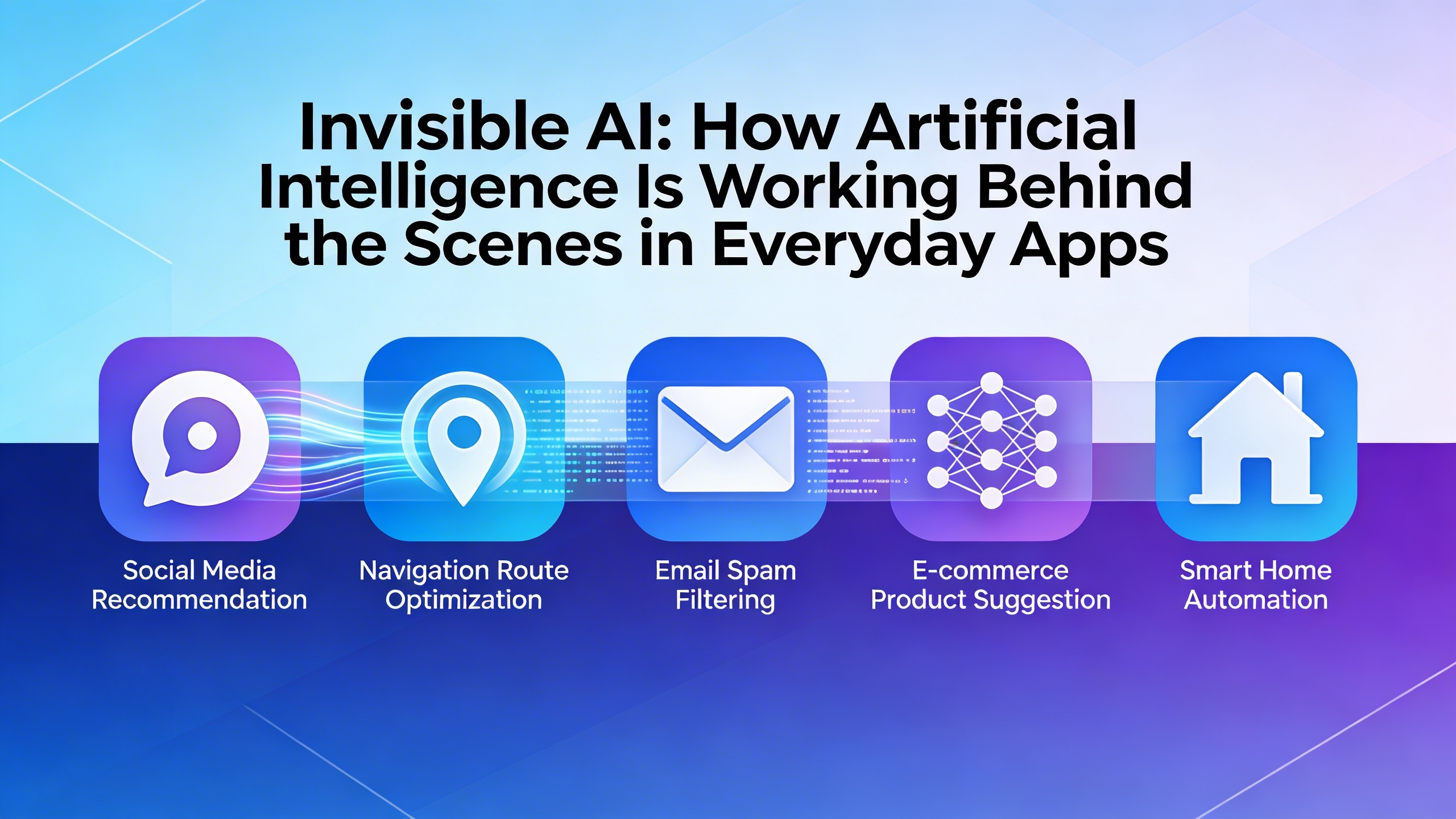
Artificial Intelligence (AI) is often associated with robots, chatbots, or futuristic machines. But the truth is, most AI today is invisible. It quietly works behind the scenes, powering the apps and services we use every day without us even noticing.
From unlocking your phone to getting personalized recommendations on YouTube or scrolling through feeds on Instagram, AI is constantly analyzing, predicting, and improving your digital experience.
In this article, we will explore what Invisible AI is, how it works, where it is used, and why it is becoming the backbone of modern technology.
What Is Invisible AI?
Invisible AI refers to artificial intelligence systems that operate in the background without direct user interaction. Unlike visible AI tools like chatbots or voice assistants, invisible AI works silently to enhance performance, personalize experiences, and automate processes.
You don’t need to activate it. You don’t even see it. But it is always working.
For example:
- Auto-correct suggestions while typing
- Recommended videos or posts
- Fraud detection in online payments
- Smart photo enhancements
All of these are powered by invisible AI.
How Invisible AI Works
Invisible AI uses several advanced technologies to function smoothly in the background.
1. Machine Learning
Machine learning allows systems to learn from user behavior. Every time you interact with an app, it collects data and improves its predictions.
For example, when you watch videos on YouTube, the system learns your preferences and suggests similar content.
2. Data Analysis
AI analyzes large amounts of data in real time. This helps apps make quick decisions, such as:
- Which content to show
- Which ads to display
- How to improve performance
3. Pattern Recognition
AI identifies patterns in your behavior. For instance:
- What time you use certain apps
- What type of content you like
- How you interact with features
This helps apps become smarter over time.
4. Automation
Invisible AI automates repetitive tasks, reducing the need for manual input.
Examples include:
- Spam filtering in emails
- Auto-sorting of files
- Background app optimization
Everyday Examples of Invisible AI
1. Social Media Platforms
Apps like Instagram and YouTube use AI to:
- Recommend posts and videos
- Detect harmful content
- Show personalized ads
Without AI, these platforms would not be as engaging.
2. Smartphone Features
Modern smartphones rely heavily on invisible AI:
- Face unlock and fingerprint recognition
- Camera enhancements
- Battery optimization
Companies like Apple and Samsung use AI to improve device performance and user experience.
3. Online Shopping
E-commerce platforms use AI to:
- Recommend products
- Predict user preferences
- Optimize pricing
For example, when you visit an online store, the products you see are often selected by AI.
4. Navigation and Maps
Apps like Google Maps use AI to:
- Predict traffic conditions
- Suggest faster routes
- Estimate travel time
This makes travel more efficient and convenient.
5. Email and Communication
Email services use AI to:
- Filter spam messages
- Suggest replies
- Organize inboxes
This saves time and improves productivity.
Benefits of Invisible AI
✔ Personalized Experience
AI customizes content and services based on user preferences, making apps more useful and engaging.
✔ Improved Efficiency
Automation reduces manual effort and speeds up processes.
✔ Better Security
AI detects unusual activity and prevents fraud in real time.
✔ Seamless User Experience
Everything works smoothly without requiring user intervention.
Challenges and Concerns
🔒 Privacy Issues
Invisible AI relies on user data. This raises concerns about how data is collected and used.
⚠️ Lack of Transparency
Since AI works in the background, users may not fully understand how decisions are made.
💻 Data Dependency
AI systems require large amounts of data to function effectively.
Why Invisible AI Is the Future
Invisible AI is becoming more powerful and widespread. Instead of creating tools that users must learn, technology is shifting toward systems that adapt to users automatically.
In the future, AI will:
- Predict needs before users ask
- Automate more complex tasks
- Improve decision-making
- Create fully personalized digital environments
Companies like Google, Microsoft, and Meta are investing heavily in invisible AI technologies.
The Impact on Businesses and Content Creators
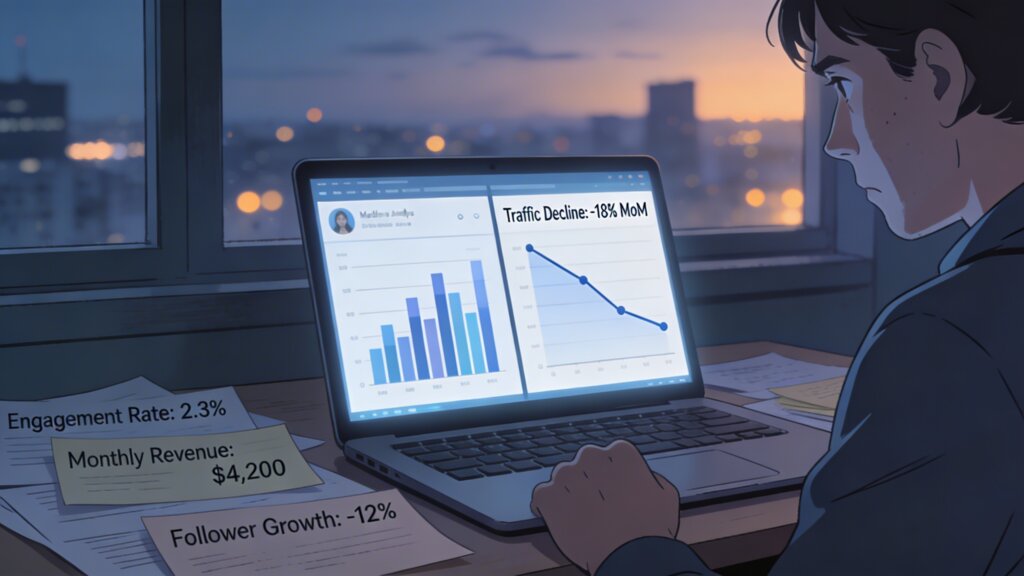
Invisible AI is also changing how businesses operate.
For Businesses:
- Better customer insights
- Improved marketing strategies
- Automated operations
For Content Creators:
- Need for high-quality, engaging content
- Focus on user behavior and preferences
- Importance of SEO and personalization
Websites like your TechyReels can benefit by creating content that aligns with AI-driven recommendations.
Conclusion
Invisible AI is quietly transforming the digital world. It is not something we see, but something we experience every day.
From social media to smartphones, from shopping to navigation, AI is working behind the scenes to make our lives easier, faster, and more personalized.
As technology continues to evolve, invisible AI will become even more powerful — shaping the future of how we interact with apps and digital systems.
The real power of AI is not just in what we see, but in what works silently in the background.
FAQ (Frequently Asked Questions)
1. What is Invisible AI?
Invisible AI refers to artificial intelligence systems that work in the background without direct user interaction.
2. Where is Invisible AI used?
It is used in social media, smartphones, online shopping, navigation apps, and email services.
3. Is Invisible AI safe?
Yes, but users should be aware of privacy settings and how their data is used.
4. How does Invisible AI improve user experience?
It personalizes content, automates tasks, and makes apps more efficient.
5. Why is Invisible AI important for the future?
Because it enables smarter, faster, and more personalized digital experiences without requiring user effort.