The world of technology is evolving rapidly, and the way data is processed and stored is also changing. For many years, cloud computing has been the backbone of modern digital infrastructure. Businesses, websites, and mobile applications store and process data in large centralized servers located in cloud data centers.
However, a new technology called edge computing is becoming increasingly important. Instead of sending data to distant servers, edge computing processes data closer to where it is generated, such as smartphones, sensors, IoT devices, and local servers.
This shift helps reduce latency, bandwidth usage, and data processing time, making applications faster and more efficient. Because of these benefits, many experts believe that edge computing will complement and sometimes replace cloud computing in specific scenarios.
In this article, we will explain what edge computing is, how it works, and why it is becoming a powerful alternative to traditional cloud systems.
What Is Edge Computing?
Edge Computing refers to a distributed computing model where data processing occurs near the location where the data is created, rather than in a centralized cloud server.
For example:
- A smart camera analyzing video locally
- A self-driving car processing sensor data instantly
- A smart factory machine analyzing performance data in real time
Instead of sending all data to a remote cloud server, edge devices process critical information locally and only send necessary data to the cloud.
This approach significantly improves speed and efficiency.
What Is Cloud Computing?
Cloud Computing is a technology where data storage and computing power are provided by remote servers connected through the internet.
Large companies operate massive cloud platforms such as:
- Amazon Web Services
- Microsoft Azure
- Google Cloud
These platforms allow businesses to store data, run applications, and manage services without owning physical servers.
Cloud computing has powered the internet for many years, but it sometimes struggles with latency and bandwidth limitations, especially when real-time processing is required.
How Edge Computing Works
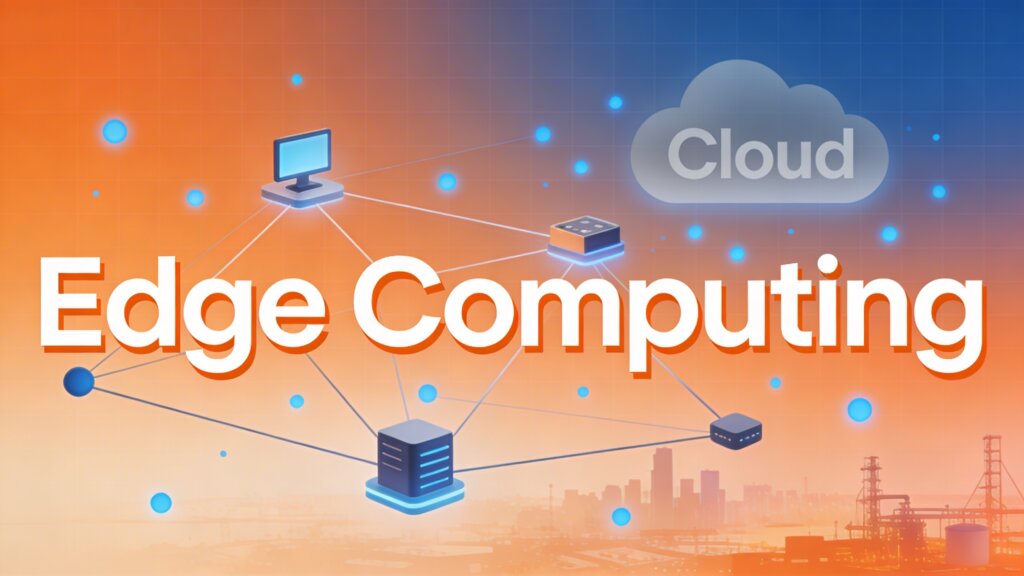
Edge computing places smaller computing systems closer to users or devices. These systems process data locally before sending selected information to central cloud servers.
For example:
- An IoT sensor collects environmental data.
- A nearby edge device processes the data instantly.
- Only important insights are sent to the cloud for long-term storage.
This reduces unnecessary data transfers and improves performance.
Many modern technologies such as smart cities, autonomous vehicles, and industrial automation rely heavily on edge computing.
Key Advantages of Edge Computing
1. Faster Data Processing
One of the biggest benefits of edge computing is low latency.
When data is processed locally instead of traveling thousands of miles to a cloud server, responses happen much faster. This is critical for technologies that require real-time decision making, such as self-driving cars or medical monitoring systems.
2. Reduced Internet Bandwidth Usage
Sending massive amounts of raw data to the cloud requires large bandwidth and high network costs.
Edge computing processes most of the data locally and sends only necessary results to central servers. This helps reduce network congestion and operational costs.
3. Better Reliability
If internet connectivity fails, cloud-based systems may stop functioning.
Edge computing allows devices to continue operating locally even without internet access, improving reliability for critical systems.
For example:
- Industrial machines
- Medical devices
- Autonomous vehicles
These systems must continue functioning even if the network connection is lost.
4. Improved Data Privacy
Edge computing can enhance data security and privacy.
Instead of transmitting sensitive information to remote servers, data can remain on local devices. This reduces the risk of data breaches and helps organizations comply with privacy regulations.
Why Edge Computing Will Replace Cloud in Some Cases
Although cloud computing remains extremely important, edge computing is becoming more suitable for certain applications.
Here are some areas where edge computing may replace traditional cloud processing.
Real-Time Applications
Applications requiring instant responses cannot always rely on cloud servers.
Examples include:
- Self-driving vehicles
- Smart traffic systems
- Industrial automation
These systems must analyze data immediately, making edge computing the better option.
Internet of Things (IoT)
The number of IoT devices is growing rapidly worldwide.
Devices such as smart sensors, cameras, and home automation systems generate enormous amounts of data. Processing this data locally using edge computing reduces the burden on cloud servers.
Remote Locations
In areas with limited internet connectivity, relying solely on cloud infrastructure is difficult.
Edge computing allows devices to process data locally without depending on constant internet access.
This is especially useful for:
- Rural infrastructure
- Oil and gas facilities
- Environmental monitoring systems
Edge Computing vs Cloud Computing
| Feature | Edge Computing | Cloud Computing |
|---|---|---|
| Processing Location | Near devices | Central data centers |
| Latency | Very low | Higher latency |
| Internet Dependency | Low | High |
| Data Transfer | Minimal | Large data transfers |
| Best For | Real-time systems | Data storage and large applications |
Instead of completely replacing the cloud, many experts believe the future will involve a hybrid approach combining both technologies.
Real-World Examples of Edge Computing
Many industries are already adopting edge computing technology.
Autonomous Vehicles
Self-driving cars process massive amounts of sensor data in real time. Edge computing allows vehicles to make instant driving decisions without relying on cloud servers.
Smart Cities
Traffic cameras, street sensors, and environmental monitors use edge computing to analyze data locally and improve urban infrastructure.
Healthcare
Medical devices such as wearable health monitors can process patient data locally and alert doctors instantly in emergencies.
The Future of Edge Computing
The rise of 5G networks, IoT devices, and smart infrastructure will accelerate the growth of edge computing.
Experts predict that billions of devices will soon process data directly at the edge of networks instead of sending everything to centralized servers.
As technology continues to evolve, edge computing will become a key component of modern digital architecture, working alongside cloud systems to create faster and more efficient networks.
Conclusion
Edge computing is transforming how data is processed and delivered across digital systems. By bringing computing power closer to devices, it provides faster performance, lower latency, improved reliability, and better data privacy.
While cloud computing will continue to play an important role in large-scale data storage and analytics, edge computing is becoming the preferred solution for real-time and data-intensive applications.
The future of technology will likely combine both systems, creating a hybrid computing environment where cloud and edge technologies work together to deliver smarter, faster, and more efficient digital services.