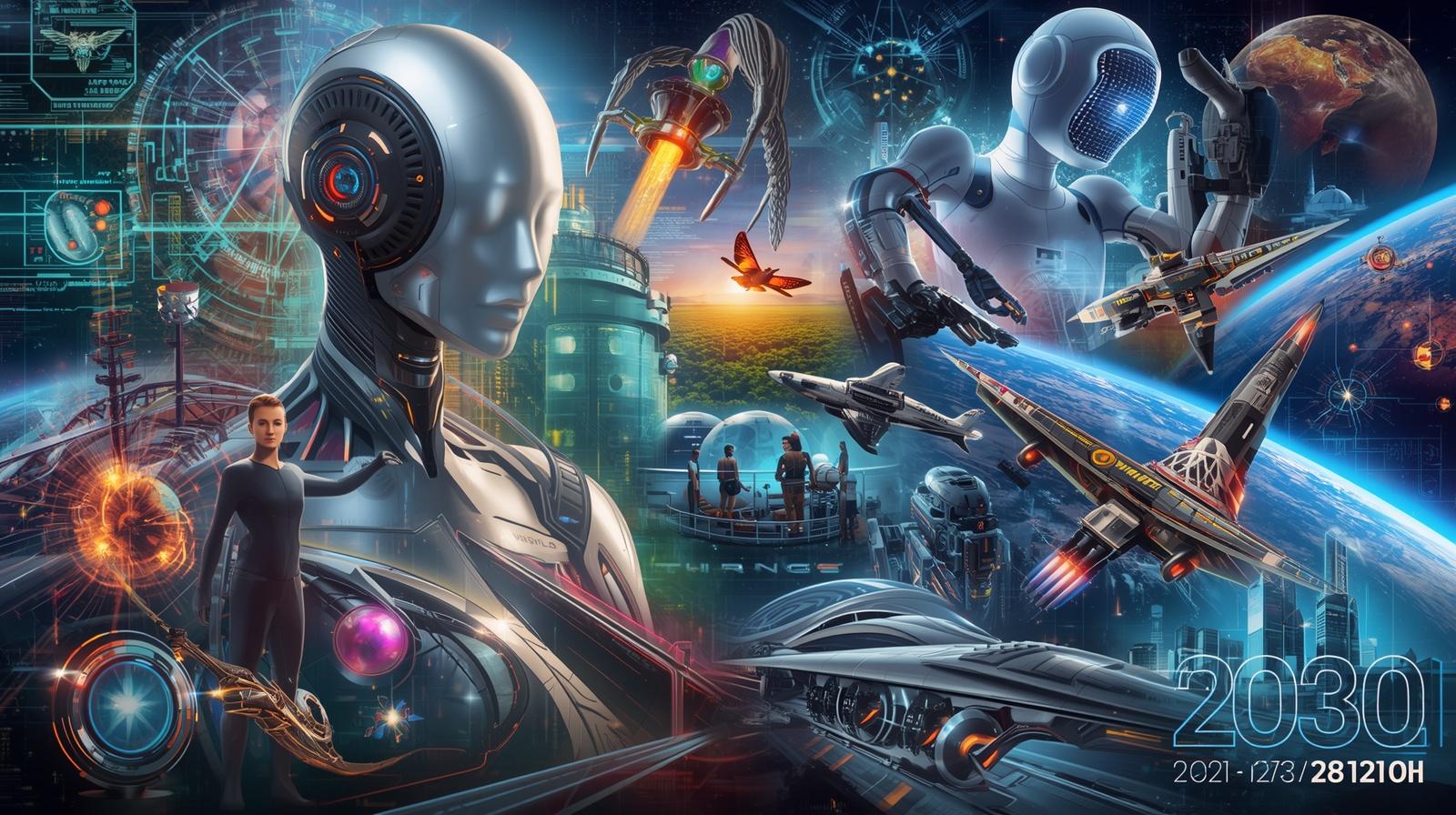
Technology is advancing at an incredible speed. Many innovations that once seemed like science fiction are now becoming reality. By 2030, new technologies will transform industries, improve healthcare, reshape transportation, and change how humans interact with the digital world.
From artificial intelligence to quantum computing, these emerging technologies are expected to redefine the global economy and everyday life. Governments and major tech companies are investing billions of dollars to develop these innovations because they will play a major role in the future.
In this article, we will explore the top 10 future technologies that will change the world by 2030, how they work, and why they are important.
1. Artificial Intelligence (AI)
Artificial Intelligence is already transforming many industries, and its influence will become even stronger by 2030.
Artificial Intelligence refers to machines that can simulate human intelligence, learn from data, and perform tasks such as decision-making, language processing, and problem solving.
Popular AI tools include platforms like ChatGPT.
Applications of AI
- Smart virtual assistants
- Automated customer service
- AI-powered healthcare diagnostics
- Self-driving vehicles
- Personalized education systems
Learn More
Experts believe AI will contribute trillions of dollars to the global economy in the coming decade.
2. Quantum Computing
Quantum Computing is a revolutionary computing technology that uses qubits instead of classical bits.
Unlike traditional computers, quantum computers can process multiple possibilities simultaneously, allowing them to solve extremely complex problems.
Major companies investing in quantum computing include IBM and Google.
Potential Uses
- Drug discovery
- Climate modeling
- Financial analysis
- Cybersecurity research
Learn More
Quantum computing could solve problems that would take classical computers thousands of years.
3. 6G Wireless Technology
6G is expected to succeed 5G networks by the end of this decade.
It will deliver extremely high-speed internet with ultra-low latency, enabling new technologies such as holographic communication and real-time AI processing.
Key Benefits
- Internet speeds up to 100 times faster than 5G
- Advanced smart cities
- Real-time remote surgery
- Ultra-immersive virtual reality
Learn More
https://www.ericsson.com/en/6g
6G will support billions of connected devices in the future digital ecosystem.
4. Edge Computing
Edge Computing processes data closer to the device where it is generated instead of sending everything to cloud servers.
This reduces latency and improves performance for applications that require real-time responses.
Key Uses
- Autonomous vehicles
- Smart factories
- Internet of Things (IoT) devices
- Industrial automation
Learn More
https://www.cloudflare.com/learning/serverless/glossary/what-is-edge-computing
Edge computing will become essential as billions of smart devices connect to the internet.
5. Biotechnology and Gene Editing
Biotechnology innovations will revolutionize medicine and agriculture by 2030.
One of the most important breakthroughs is CRISPR, which allows scientists to modify DNA with incredible precision.
Future Possibilities
- Curing genetic diseases
- Developing disease-resistant crops
- Personalized medical treatments
- Advanced regenerative medicine
Learn More
https://www.genome.gov/about-genomics/policy-issues/CRISPR
Gene editing technology has the potential to dramatically improve human health.
6. Autonomous Vehicles
Self-driving vehicles are becoming a reality thanks to advances in artificial intelligence, sensors, and machine learning.
Companies like Tesla and Waymo are leading this innovation.
Benefits of Autonomous Vehicles
- Reduced traffic accidents
- Improved transportation efficiency
- Lower transportation costs
- Increased mobility for elderly and disabled people
Learn More
Autonomous transportation could reshape cities and logistics systems worldwide.
7. Augmented Reality (AR) and Virtual Reality (VR)
Augmented Reality and Virtual Reality are transforming entertainment, education, and business.
These technologies allow users to experience immersive digital environments.
Applications
- Virtual classrooms
- Remote collaboration
- Gaming and entertainment
- Virtual tourism
Learn More
By 2030, AR and VR may become part of everyday life through wearable devices.
8. Internet of Things (IoT)
Internet of Things refers to everyday devices connected to the internet that collect and exchange data.
Examples include smart home devices, wearable fitness trackers, and connected vehicles.
Future Impact
- Smart homes
- Smart cities
- Automated agriculture
- Industrial monitoring systems
Learn More
https://www.ibm.com/topics/internet-of-things
By 2030, experts predict that tens of billions of IoT devices will be connected worldwide.
9. Blockchain Technology
Blockchain is a decentralized system for recording transactions securely.
It is best known for supporting cryptocurrencies like Bitcoin, but its applications go far beyond digital money.
Future Applications
- Secure digital identities
- Supply chain tracking
- Smart contracts
- Decentralized finance (DeFi)
Learn More
Blockchain technology could reshape financial systems and digital trust.
10. Renewable Energy Technologies
As climate change becomes a major global challenge, renewable energy technologies are becoming essential.
Innovations in solar, wind, and battery storage systems will help create a cleaner and more sustainable energy future.
Companies like Tesla are investing heavily in energy storage and solar technologies.
Benefits
- Reduced carbon emissions
- Energy independence
- Sustainable electricity production
- Cleaner environment
Learn More
https://www.iea.org/topics/renewables
Renewable energy will play a crucial role in building a sustainable global economy.
Why These Technologies Matter
These emerging technologies will influence nearly every aspect of society.
They will help solve major global challenges such as:
- Climate change
- Healthcare innovation
- Transportation efficiency
- Digital security
- Economic growth
Countries that lead in developing these technologies will gain major economic and technological advantages.
The Future of Innovation
The next decade will likely see unprecedented technological breakthroughs. Many of these technologies will work together to create smarter cities, more efficient industries, and better living standards.
For example:
- AI combined with biotechnology could accelerate medical discoveries.
- IoT and edge computing will power smart infrastructure.
- Quantum computing may solve problems currently impossible for classical computers.
The future will likely involve a highly interconnected technological ecosystem.
Conclusion
The technologies emerging today will shape the world of tomorrow. Artificial intelligence, quantum computing, biotechnology, renewable energy, and other innovations will dramatically transform how people live, work, and interact with technology.
By 2030, many of these technologies will move from experimental research to mainstream adoption, influencing industries, governments, and everyday life.
Understanding these future technologies helps individuals and businesses prepare for the next wave of digital transformation.
Those who adapt early will be best positioned to benefit from the opportunities created by the technological revolution.