
What if the biggest technology revolution isn’t the one making headlines?
When people talk about the future, the conversation usually revolves around artificial intelligence, electric vehicles, or the latest smartphone innovations. These technologies dominate news feeds, social media discussions, and investment reports.
But history teaches us an important lesson: the biggest opportunities often emerge quietly.
Before smartphones transformed the world, few people imagined carrying a powerful computer in their pockets. Before cloud computing became essential, many businesses considered it a risky experiment. The same pattern is unfolding today.
A silent technology boom is taking shape behind the scenes, and while it may not attract daily headlines, it has the potential to create the next generation of billion-dollar industries.
The companies that recognize this shift early could become tomorrow’s market leaders.
The Hidden Shift Nobody Is Talking About
Technology is entering a new phase.
For decades, innovation focused on making devices faster, smaller, and more powerful. Today, the focus is shifting toward making systems smarter, more connected, and increasingly autonomous.
This transformation is happening through the convergence of several technologies:
- Artificial Intelligence
- Edge Computing
- Advanced Sensors
- Automation Systems
- Digital Twins
- Smart Infrastructure
- Machine Learning Platforms
Individually, these technologies are impressive.
Combined, they are creating entirely new industries.
Imagine factories that predict equipment failures before they occur. Cities that automatically optimize traffic flow. Healthcare systems that identify diseases before symptoms appear.
These are no longer futuristic concepts.
They are becoming reality.
Why Most People Haven’t Noticed
The reason this boom remains largely invisible is simple.
Many groundbreaking technologies operate behind the scenes.
People notice the smartphone in their hands but rarely think about the cloud systems, data centers, sensors, and software platforms powering their digital experiences.
Similarly, the next wave of innovation is being built in places most consumers never see:
- Industrial facilities
- Research laboratories
- Enterprise software platforms
- Logistics networks
- Smart manufacturing plants
Because these technologies are less visible than consumer gadgets, they receive less public attention.
Yet they may generate significantly greater economic value.
The Rise of Intelligent Infrastructure
One of the most promising areas is intelligent infrastructure.
Traditionally, infrastructure has been passive.
Roads carried vehicles.
Buildings housed people.
Power grids delivered electricity.
Now infrastructure is becoming intelligent.
Modern systems can collect data, analyze conditions, and make decisions in real time.
Smart buildings adjust energy consumption automatically.
Connected transportation networks reduce congestion.
Utility systems predict maintenance needs before breakdowns occur.
This evolution could save businesses and governments billions of dollars annually while improving efficiency and sustainability.
The market potential is enormous.
Every city, business district, transportation network, and industrial facility could eventually require intelligent infrastructure solutions.
The Billion-Dollar Opportunity in Automation
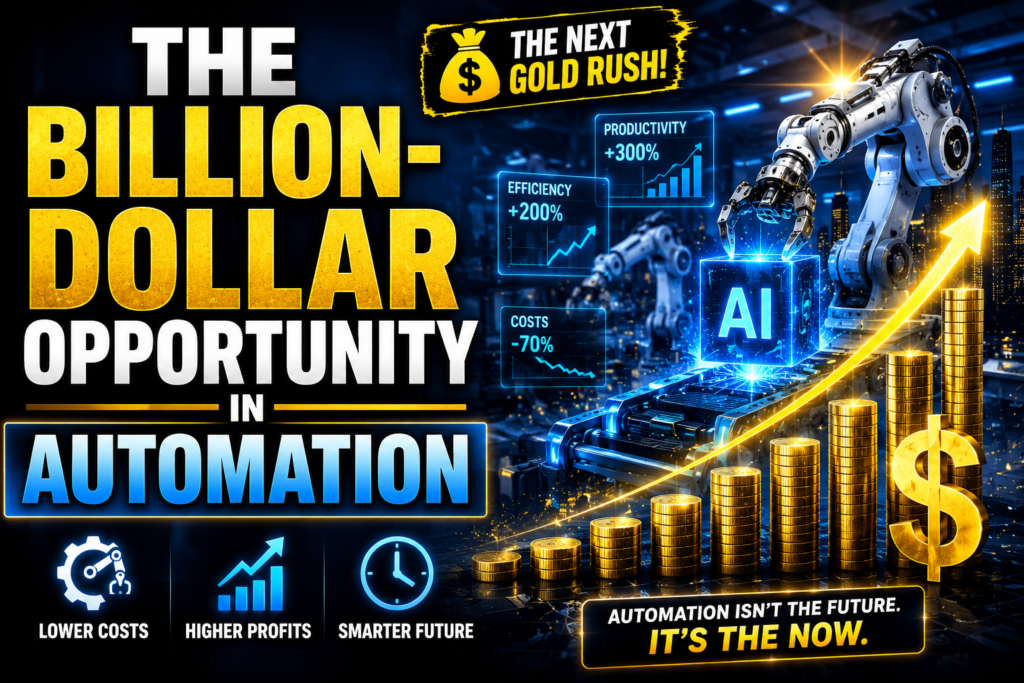
Automation is often associated with robots replacing repetitive tasks.
The reality is far more interesting.
The next generation of automation focuses on collaboration rather than replacement.
Businesses are increasingly adopting systems that assist workers rather than eliminate them.
For example:
A warehouse employee may use AI-powered tools to optimize inventory management.
A healthcare professional may rely on predictive software to identify patient risks.
A factory technician may receive real-time guidance from intelligent monitoring systems.
This approach increases productivity while allowing human expertise to remain central.
Companies developing these solutions are entering a rapidly expanding market.
As labor shortages continue affecting industries worldwide, demand for productivity-enhancing technologies is likely to grow significantly.
Digital Twins Could Change Everything
One of the most fascinating developments is the rise of digital twins.
A digital twin is a virtual representation of a physical object, process, or environment.
Imagine creating a digital copy of:
- A factory
- A hospital
- A city
- An aircraft
- A power plant
Engineers can test scenarios, identify risks, and optimize performance without affecting real-world operations.
This capability dramatically reduces costs and improves decision-making.
Many experts believe digital twins could become standard tools across multiple industries within the next decade.
The companies providing these solutions may become major players in the global economy.
Healthcare’s Quiet Revolution
Healthcare is experiencing one of the most significant technological transformations in history.
While flashy medical breakthroughs attract attention, many of the most important changes are occurring in data analysis and predictive systems.
Advanced technologies can now:
- Detect patterns invisible to humans
- Analyze large medical datasets
- Improve diagnostic accuracy
- Personalize treatment plans
- Predict potential health risks
The result is a healthcare system that becomes increasingly proactive rather than reactive.
Instead of treating illnesses after symptoms appear, future systems may identify risks before patients become seriously ill.
This shift could improve outcomes while reducing healthcare costs globally.
Smart Manufacturing Is Accelerating
Manufacturing is another sector undergoing dramatic change.
Modern factories increasingly rely on intelligent systems capable of:
- Monitoring equipment health
- Predicting maintenance needs
- Optimizing production schedules
- Reducing waste
- Improving quality control
The benefits are substantial.
Even small improvements in efficiency can generate millions of dollars in savings for large manufacturers.
As a result, businesses worldwide are investing heavily in these technologies.
The market for industrial intelligence solutions continues expanding, creating opportunities for startups and established companies alike.
New Startups Will Emerge
Every major technological shift creates new businesses.
The internet created search engines, social media platforms, and e-commerce giants.
Smartphones created app developers, mobile payment systems, and digital content industries.
The current technology boom will likely produce entirely new categories of companies.
Future billion-dollar startups may specialize in:
- Intelligent infrastructure management
- Predictive healthcare systems
- Digital twin platforms
- Industrial analytics
- Autonomous logistics solutions
- Advanced sensor technologies
Many of these companies do not yet exist.
Others are currently small startups operating far below the public radar.
Challenges Still Exist
Every major opportunity comes with challenges.
The silent technology boom faces several obstacles:
Security Risks
As systems become more connected, cybersecurity becomes increasingly important.
Businesses must protect sensitive data and critical infrastructure.
Regulatory Uncertainty
Governments worldwide are still developing rules for emerging technologies.
Future regulations may influence adoption rates.
Talent Shortages
Advanced technologies require skilled professionals.
Many industries already face shortages of qualified workers.
High Initial Costs
Some solutions require significant investment before delivering measurable returns.
Despite these challenges, the long-term trend remains positive.
Organizations continue investing because the potential benefits are too significant to ignore.
What Happens Over the Next Decade?
The next ten years may witness one of the largest technological transformations in modern history.
Artificial intelligence will continue advancing.
Automation systems will become more sophisticated.
Digital infrastructure will become increasingly intelligent.
Healthcare technologies will grow more predictive.
Manufacturing systems will become more autonomous.
Many of these developments will occur gradually.
Most people may not notice the shift until it becomes impossible to ignore.
By then, entirely new industries may have emerged.
New market leaders may dominate sectors that barely exist today.
And companies operating quietly today may become household names tomorrow.
Final Thoughts
The most valuable opportunities rarely arrive with flashing lights and dramatic headlines.
They often begin quietly.
The silent technology boom unfolding today may not generate the same excitement as consumer gadgets or viral applications. Yet its potential impact could be far greater.
The technologies being built behind the scenes are laying the foundation for smarter cities, more efficient industries, better healthcare systems, and entirely new business models.
History shows that those who recognize transformative shifts early often gain the greatest advantage.
The question is not whether this silent technology boom will reshape industries.
The real question is: which companies, entrepreneurs, and investors will recognize its potential before everyone else does?
Frequently Asked Questions
What is the silent technology boom?
It refers to the rapid growth of behind-the-scenes technologies such as AI infrastructure, automation systems, digital twins, smart manufacturing, and intelligent infrastructure.
Why is it called a silent boom?
Because many of these innovations operate in business and industrial environments rather than consumer markets, making them less visible to the general public.
Which industries could benefit most?
Healthcare, manufacturing, transportation, logistics, education, energy, and smart city development are among the sectors likely to experience significant transformation.
Can startups still enter this market?
Yes. Many emerging sectors remain in the early stages, creating opportunities for innovative startups.
Could this create billion-dollar companies?
History suggests that major technological shifts often generate new industry leaders, making billion-dollar opportunities highly possible.