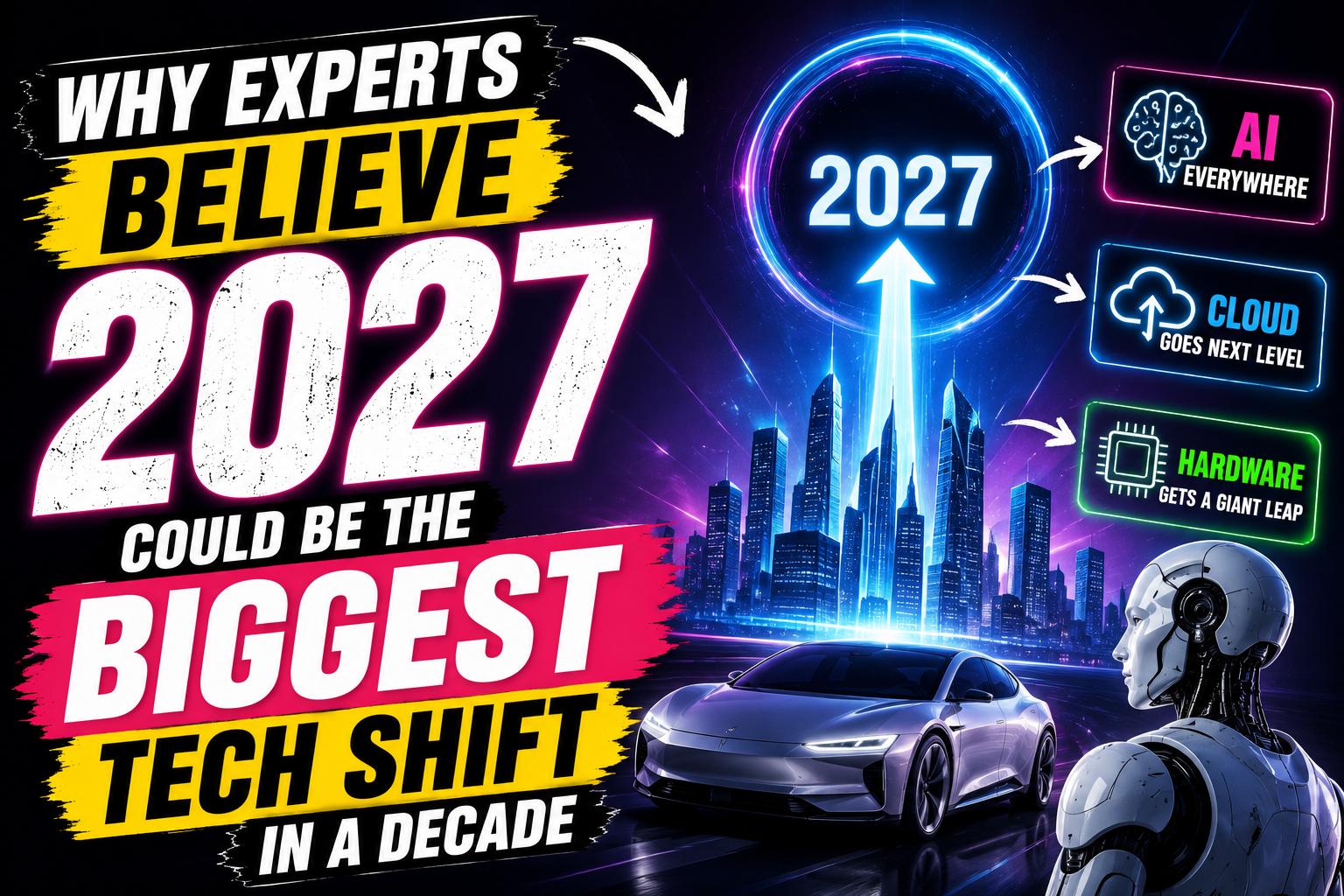
Imagine waking up in 2027 and discovering that your AI assistant has already organized your schedule, answered emails, booked appointments, researched your next purchase, and even negotiated a better internet plan on your behalf. It may sound like science fiction today, but many technology analysts believe the next few years could bring one of the most significant technological shifts of the modern era.
For decades, major technological breakthroughs have reshaped how people live and work. The internet connected the world. Smartphones put powerful computers in our pockets. Cloud computing transformed businesses. Artificial intelligence is now accelerating change at a pace rarely seen before.
While nobody can predict the future with complete certainty, many experts believe that 2027 could mark a turning point where several powerful technologies mature at the same time. The combination of advanced AI, robotics, automation, biotechnology, and next-generation computing may create changes that affect nearly every industry.
Why 2027 Is Getting So Much Attention
Technology rarely changes through a single invention. Instead, major shifts happen when multiple innovations become practical at the same time.
Think about smartphones. The technology behind them existed for years before the first modern smartphones became mainstream. Better processors, faster internet, improved batteries, and software ecosystems all came together to create a revolution.
Something similar may be happening today.
Artificial intelligence is improving rapidly. Robotics is becoming more capable. Computing power continues to increase. Businesses are investing billions of dollars into automation and digital transformation.
By 2027, many of these technologies could reach a point where they become accessible to millions of people and businesses worldwide.
The Rise of Autonomous AI
Most people currently use AI as a tool. They ask questions, generate content, or receive recommendations.
The next stage may be autonomous AI systems that can complete entire tasks with minimal human involvement.
Instead of asking an AI to write a report, future systems may research the topic, collect information, create the report, generate a presentation, and prepare a summary automatically.
Businesses are already experimenting with AI agents capable of handling customer support, project management, scheduling, data analysis, and software development tasks.
If these systems continue to improve, companies may dramatically increase productivity while reducing repetitive work.
This doesn’t necessarily mean humans will become unnecessary. Instead, many workers may shift toward creative, strategic, and relationship-focused roles while AI handles routine operations.
Robotics Could Leave the Factory Floor
For years, robots have been common in manufacturing plants. However, advances in artificial intelligence are allowing robots to operate in more complex environments.
Future robots may assist in:
- Warehouses
- Hospitals
- Retail stores
- Construction sites
- Agriculture
- Home services
Imagine a robot that can understand spoken instructions, recognize objects, navigate obstacles, and learn new tasks through observation.
As hardware costs decrease and software becomes smarter, robots may become practical for businesses that previously could not afford automation.
This could increase efficiency while helping industries address labor shortages and rising operational costs.
Healthcare Could Enter a New Era
Healthcare is another area that may experience significant transformation.
Artificial intelligence is already helping researchers analyze medical data, identify patterns, and accelerate scientific discoveries.
Future systems could assist doctors by:
- Detecting diseases earlier
- Analyzing medical images
- Monitoring patient health in real time
- Recommending treatment options
- Predicting potential health risks
Wearable devices are becoming increasingly sophisticated. Future health technologies may continuously track important health indicators and alert users before problems become serious.
The result could be a shift from treating illness to preventing it.
Education May Become More Personalized
Traditional education often follows a one-size-fits-all model.
However, AI-powered learning systems could create highly personalized educational experiences.
Students may receive customized lessons based on their strengths, weaknesses, learning styles, and goals.
Instead of moving at the same pace as an entire classroom, learners could progress at speeds that suit them individually.
Teachers would still play a crucial role, but technology could help them provide more targeted support and spend less time on administrative tasks.
This approach could improve learning outcomes while making education more accessible across the world.
The Workplace Will Continue to Evolve
One of the biggest questions surrounding technological progress involves jobs.
History shows that technological revolutions often eliminate certain roles while creating entirely new industries.
The internet created careers that barely existed decades ago. Social media created new professions. Mobile technology generated millions of opportunities worldwide.
The AI revolution may follow a similar pattern.
Some repetitive tasks may become automated. At the same time, demand may increase for professionals skilled in:
- AI management
- Data analysis
- Cybersecurity
- Robotics maintenance
- Digital strategy
- Human-centered design
Workers who continuously learn and adapt may find themselves in a strong position as industries evolve.
Businesses Are Preparing Right Now
Many organizations are not waiting until 2027.
Major companies are already investing heavily in artificial intelligence, cloud infrastructure, advanced chips, and automation technologies.
Business leaders understand that technological advantages can create significant competitive benefits.
Companies that adopt new tools effectively may improve productivity, reduce costs, and deliver better customer experiences.
Those that ignore technological changes risk falling behind competitors who move faster.
This is one reason why discussions about future technology have become so important in boardrooms around the world.
Challenges and Risks Cannot Be Ignored
Every technological revolution creates opportunities and challenges.
As AI systems become more powerful, important questions emerge regarding:
- Privacy
- Security
- Regulation
- Misinformation
- Job transitions
- Ethical decision-making
Governments, businesses, researchers, and communities will need to work together to address these concerns.
The goal should not be to stop innovation but to ensure that technological progress benefits society responsibly.
Balancing innovation and accountability may become one of the defining challenges of the coming decade.
What Could the World Look Like by 2030?
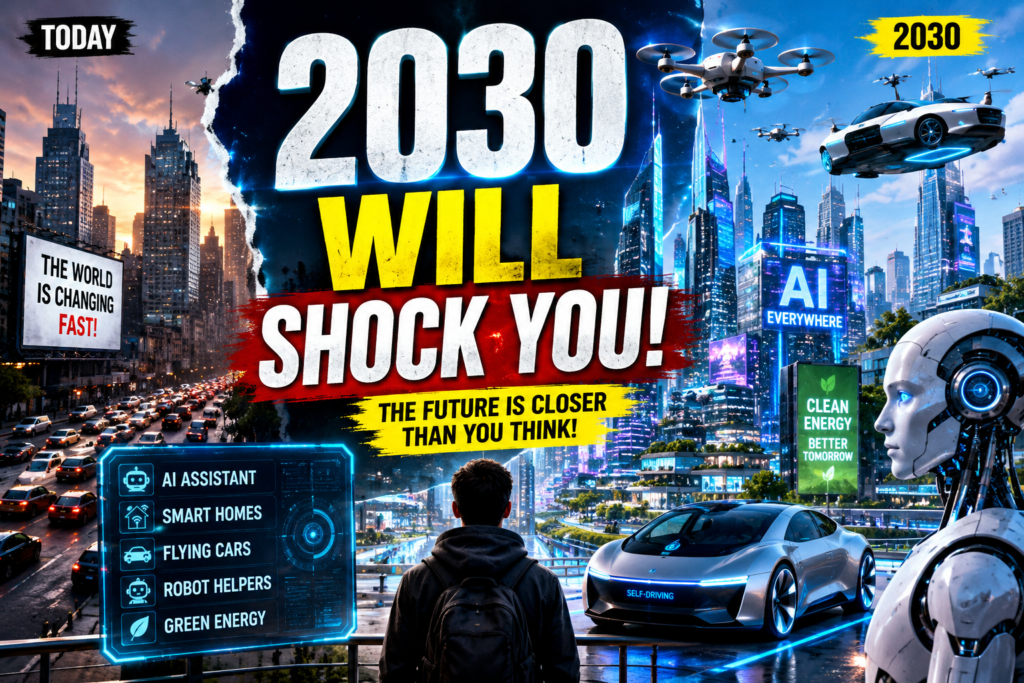
If current trends continue, the world of 2030 could feel dramatically different from today.
People may work alongside intelligent AI assistants every day. Autonomous systems could manage many routine business operations. Advanced robots may become common in industries beyond manufacturing. Personalized healthcare could help prevent diseases before symptoms appear. Education may become more adaptive and accessible than ever before.
Some predictions will prove accurate. Others will not.
However, one thing appears increasingly clear.
Technology is advancing faster than many people realize.
The organizations, workers, and entrepreneurs who pay attention to these changes today may be better prepared for the opportunities of tomorrow.
Final Thoughts
The excitement surrounding 2027 is not about a single invention. It is about the convergence of multiple powerful technologies reaching maturity at roughly the same time.
Artificial intelligence, robotics, healthcare innovation, automation, and advanced computing are all progressing rapidly. Together, they have the potential to reshape industries, redefine work, and transform everyday life.
Whether 2027 becomes the biggest technology shift in a decade remains to be seen. But the momentum building today suggests that the coming years may be remembered as the beginning of a new technological era.
The future is not arriving slowly anymore. It is accelerating, and those who understand it early may have the greatest advantage.